A633 Carbon Steel Coil
ASTM A633 steel includes four grades: A, C, D, and E, of which the thickness of grade C can reach 4 inches and the thickness of grade E can reach 6 inches. ASTM A633 steel specification is based on the standard specification for standardized high-strength low-alloy structural steel plate, which requires high notch toughness under low temperature conditions.
316L Stainless Steel Coil
316L stainless steel is an austenitic stainless steel metal alloy that contains nickel and molybdenum, making it corrosion resistant. 316L is a 316 low carbon grade. This grade is not affected by sensitization (grain boundary carbide precipitation). It is often used for large-gauge welded parts (approximately over 6mm). 316L stainless steel has higher creep, fracture stress and tensile strength than chromium nickel austenitic stainless steel at high temperature.
301 Stainless Steel Coil
301 grade stainless steel is a common austenitic stainless steel with good corrosion resistance and high carbon content, and can be cold worked to various temperatures. Among stainless steels, 301 is the most easily strengthened steel by cold deformation. Cold deformation processing can improve the strength and hardness of steel, and retain sufficient plasticity and toughness. In addition, this steel has good rust resistance under atmospheric conditions, but its corrosion resistance in reducing media is poor, and its corrosion resistance in chemical media such as acid, alkali and salt is poor. Therefore, it is not recommended for corrosive environments.
Prepainted Galvanized Steel Coil
When steel components are used to make more complex finished products, they can be galvanized before the product is assembled. This is called pre-galvanizing, or "pre-galvanizing". It may also be referred to as "in-line", "continuous" or "rolled" galvanizing. Essentially, steel components (such as sheets or wires) are galvanized using an automated process before they are cut to size.


Can't find the service you are looking for? Please contact us!
To inquire about our products, please leave us your email and we will contact you within 24 hours.
Email : sales1@taihangmetals.com
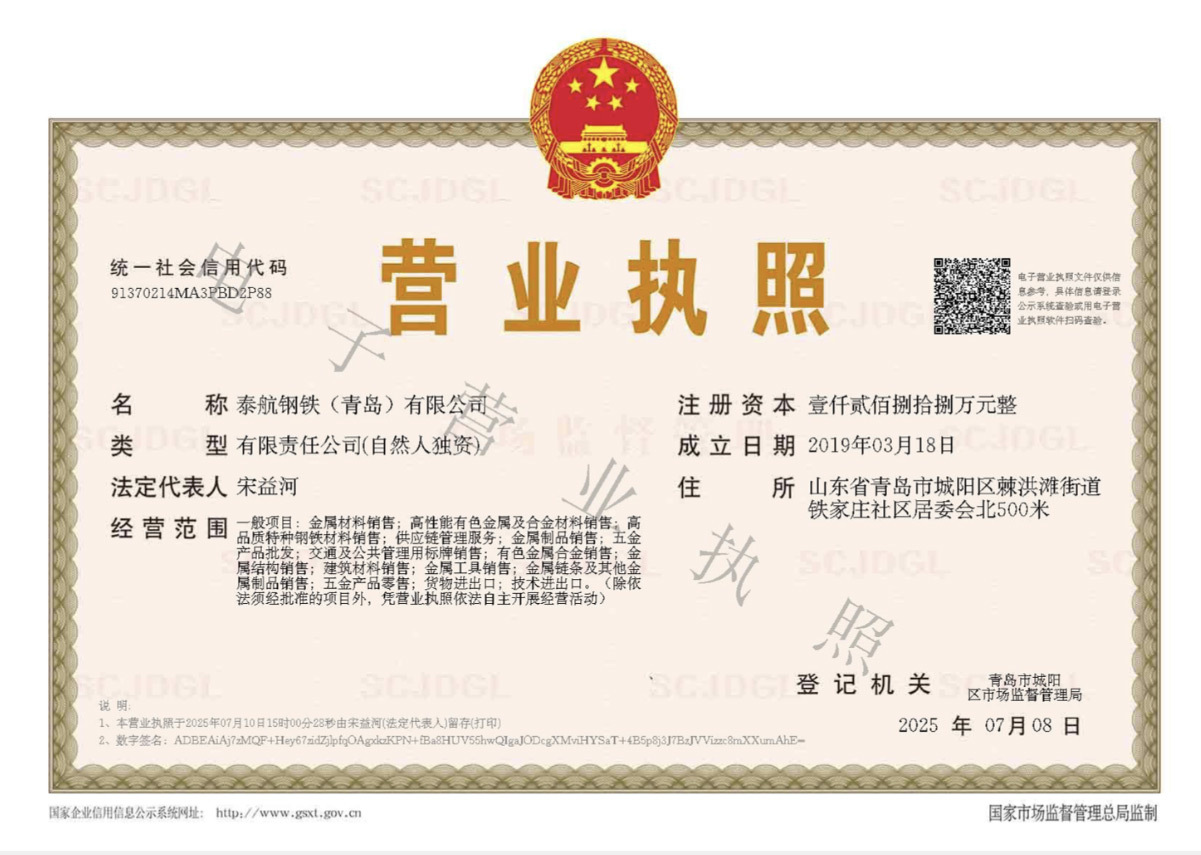
Add : Jihongtan Street, Chengyang District, Qingdao City, Shandong Province
GET A FREE QUOTE
Leave your contact information and we will contact you during working hours.
Copyright : TAIHANG STEEL (QINGDAO)CO., LTD. Powerby : CEGLOBAL SEO BUSINESS LICENSE PRIVACY POLICY